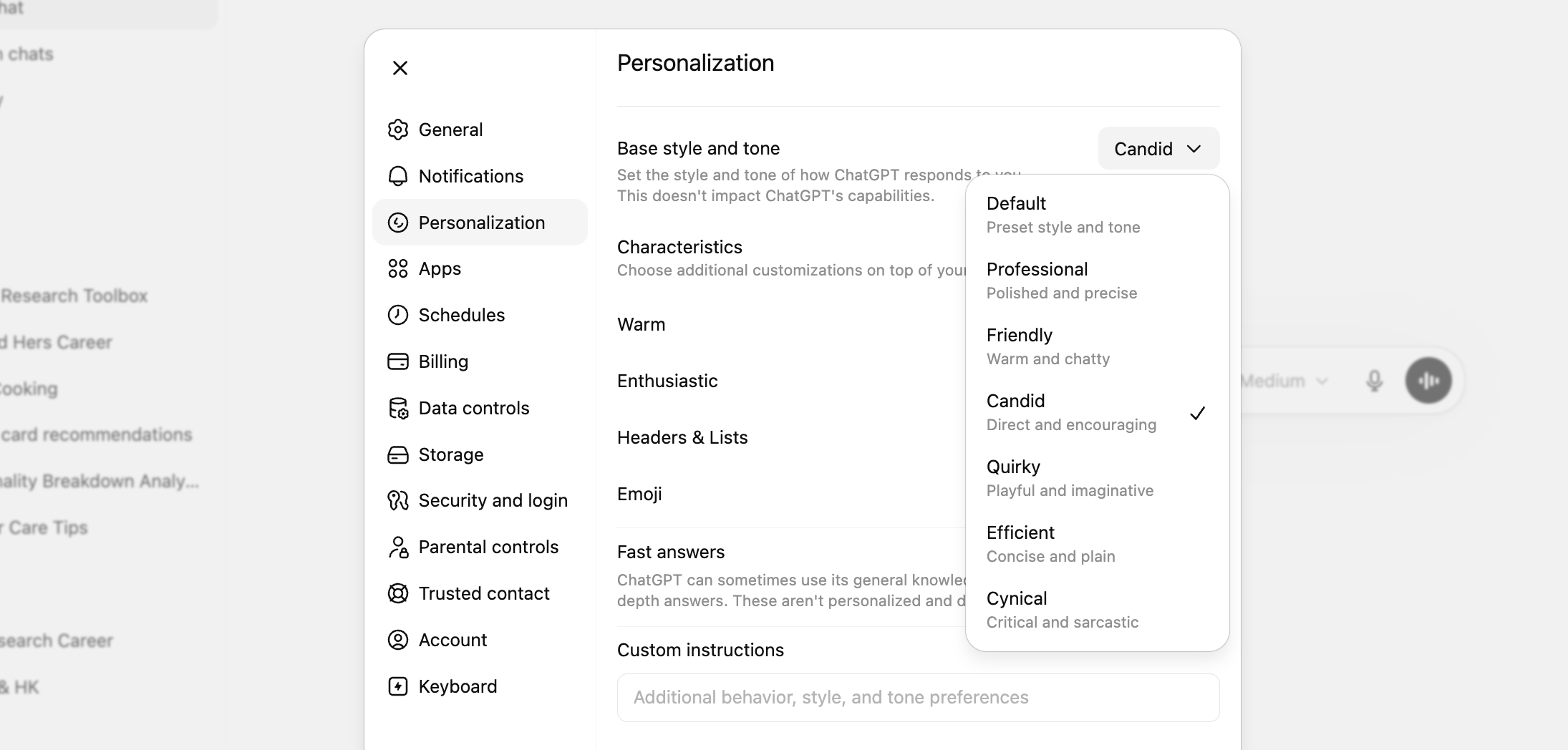
ChatGPT Multi-Personality
Overview
After GPT-5 launched, many users felt that ChatGPT's personality had changed for the worse.
The model was perceived as colder, less personable, sycophantic, and robotic. What had previously felt warm, genuine, and easy to talk to now felt rigid for everyday conversations.
The feedback triggered a high-priority "Code Orange" across the ChatGPT organization focused on improving personality: giving users more control over how ChatGPT communicates.
I worked with the cross-functional Personality team to define how users think about ChatGPT's personality, evaluate potential personality presets, and translate user needs into launch-ready definitions and product guidance. Over 1.5 weeks, I designed and executed four rapid studies that helped the team move from an initial persona-based direction toward a more durable model of style and tone that adapts contextually to the conversation.
My Role
I led rapid UXR for the personality steerability workstream, partnering with Model Behavior Product, Model Designers, Content Designers, Model Scientists, and Product Designers.
Objectives
Defining the core research questions for personality steerability
Designing and executing four rapid studies in 1.5 weeks
Testing personality preset behavior, naming conventions, trait comprehension, desirability, and guardrails
Synthesizing findings into clear criteria for launch decisions
Translating user needs into shippable preset definitions and guidance for product, design, and model behavior partners
The Challenge
The team needed to respond quickly to strong user feedback after GPT-5, but "personality" was an imprecise and emotionally loaded concept.
Users did not always describe personality in consistent language. Some wanted ChatGPT to feel warmer or more human. Others wanted it to stay professional, efficient, direct, or less verbose.
A personality feature also carried product risk: if the product framing was done incorrectly, it could make ChatGPT feel like a set of characters rather than a private space and confidant.
Research Questions
What do users mean when they say ChatGPT has a "personality"?
Should personality presets be named as nouns or adjectives?
Based on comprehension and desirability, what set of personality “characteristics” should be made configurable?
Which design directions work best with how users expect to interact with AI personality?
Research + Reporting Approach
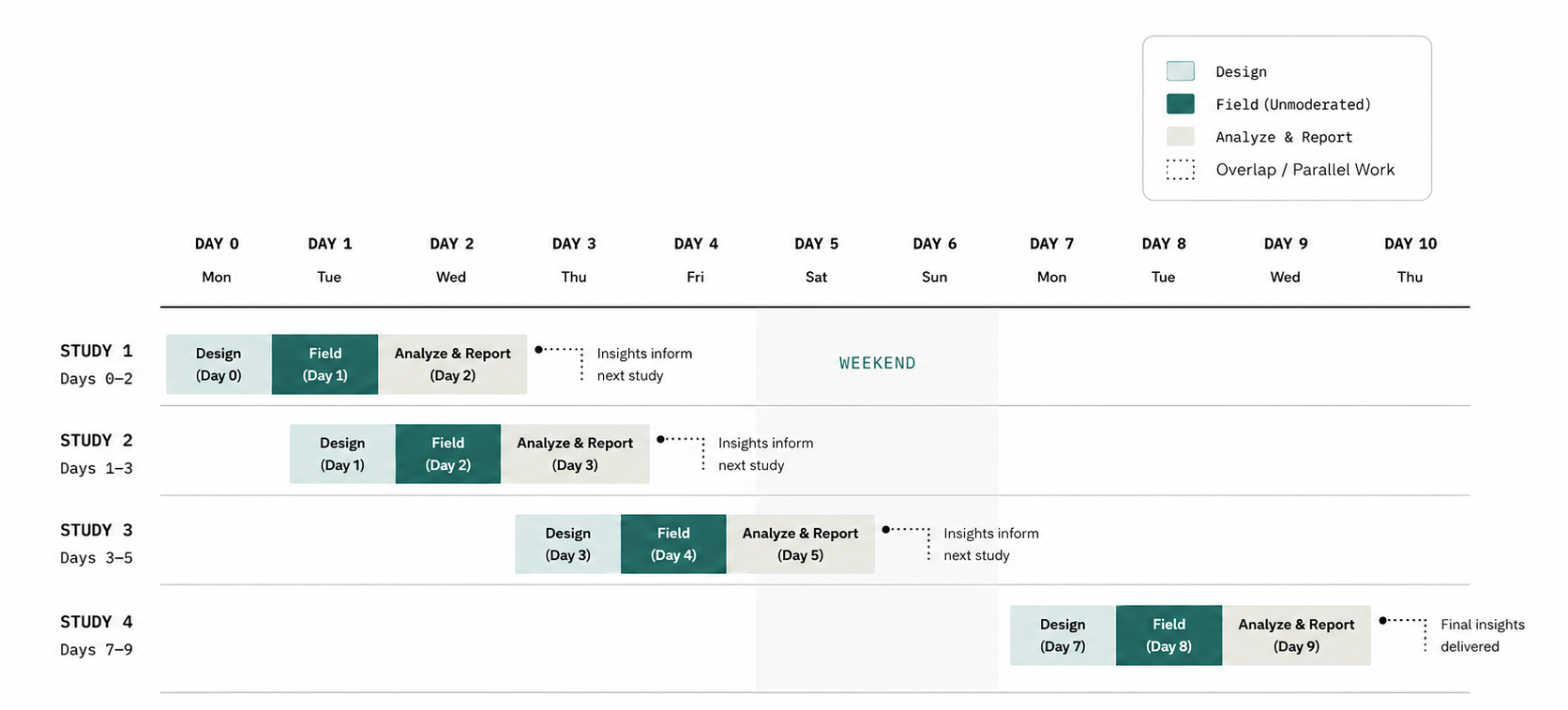
Because the work was urgent, I structured the research as a rapid sequence of four unmoderated studies.
Each study was designed to answer a specific product or model decision, with timing and priority set in close collaboration with the team.
While one study was in the field, the next was being designed, and prior studies were being analyzed and reported.
Each study was synthesized into a detailed report for the Model Behavior xfn team, with key findings and recommendations distilled into a one-page Executive Summary for leadership.
Research toolkit
UserTesting
ChatGPT
Figma
Impact + Reflection
This work helped the team respond to a major user trust and product quality issue after GPT-5.
It resulted in a set of personality features and model decisions, launched with GPT-5.1.
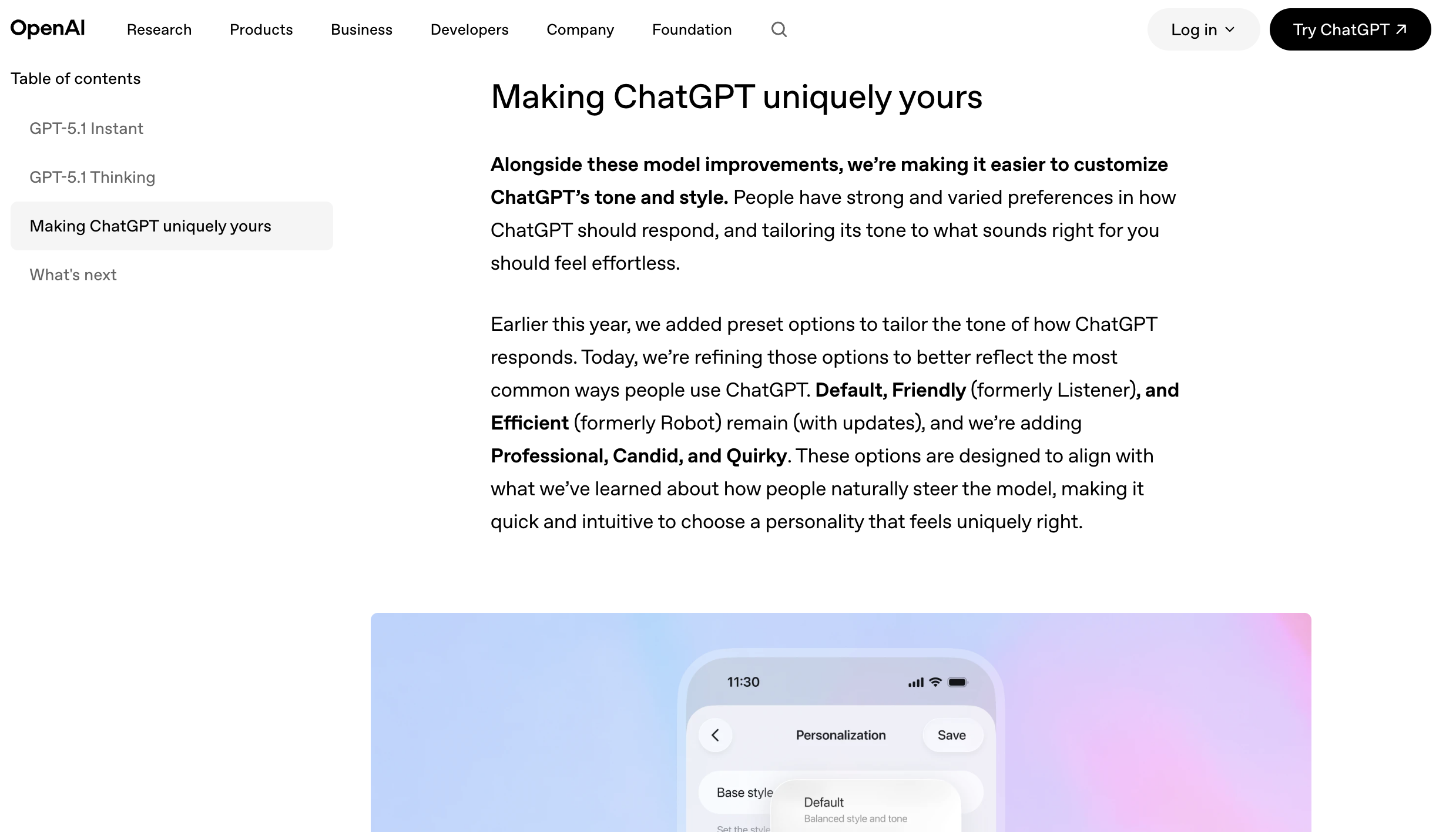
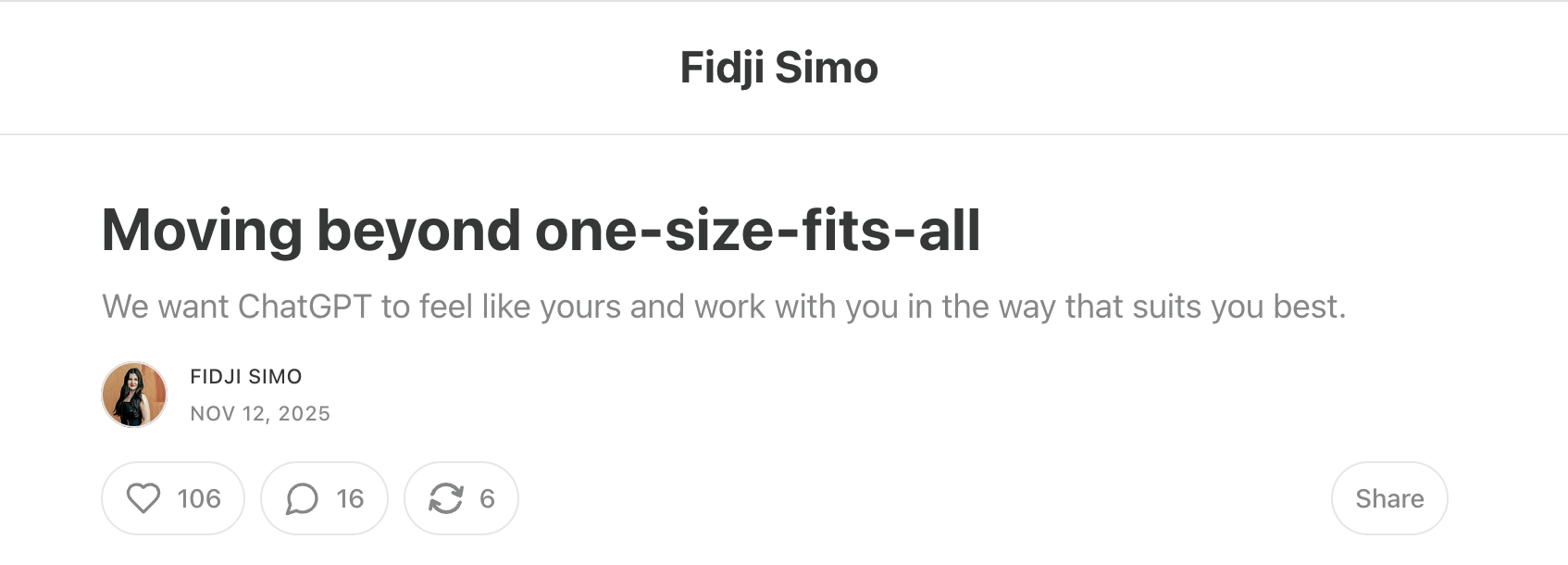
The work also influenced executive alignment.
“UXR is very convincing. I’ve updated my thinking”
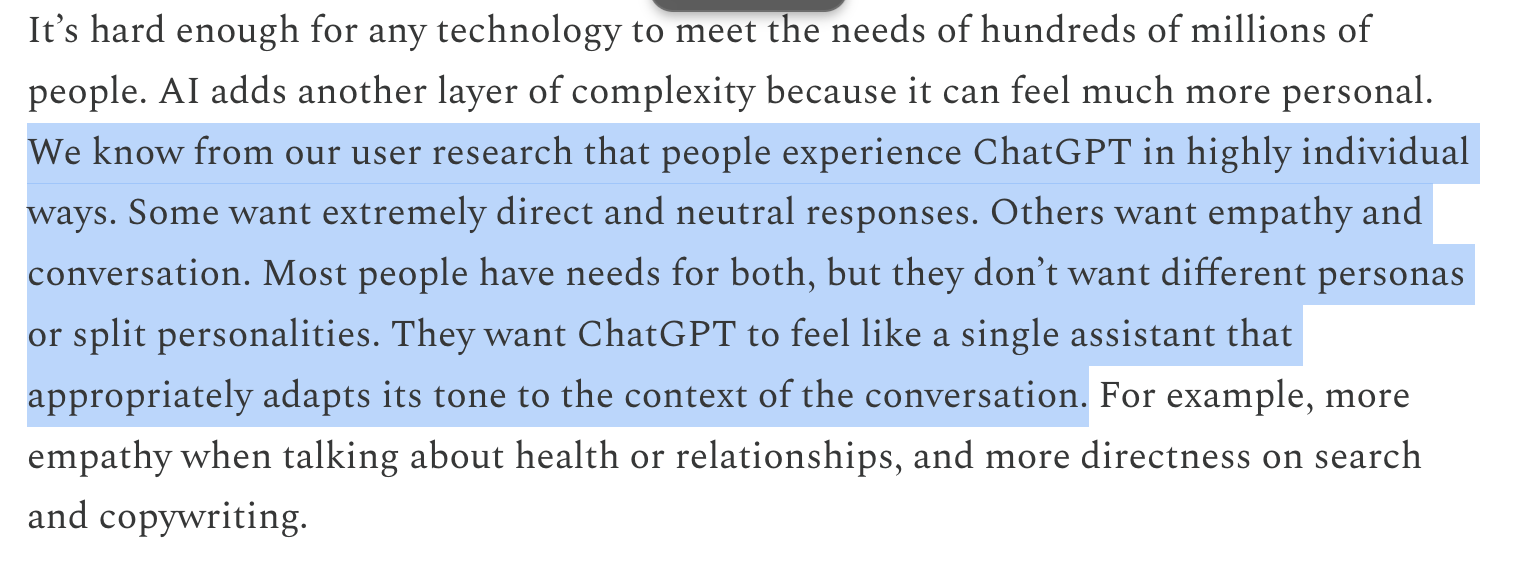
The research helped convince the CEO to change personality product direction, shifting the team's direction from personality as personas or characters to personality as adaptable style and tone.
After launch, all personality presets showed very high 7-day retention rates of at least 90%, with some presets being DAU positive.
The rapid study sequence worked because each study had a specific decision to answer.
Rather than trying to solve personality all at once, I broke the problem into smaller questions (definition, naming, traits, guardrails, and design direction) so it was easier for cross-functional partners to use in real time.
The work also benefited from close collaboration across product, design, model behavior, and model science. Personality steerability sits between product UX and model behavior, so the research needed to be legible to both groups. Translating user language into product criteria and model-relevant guidance was one of the most important parts of the work.